



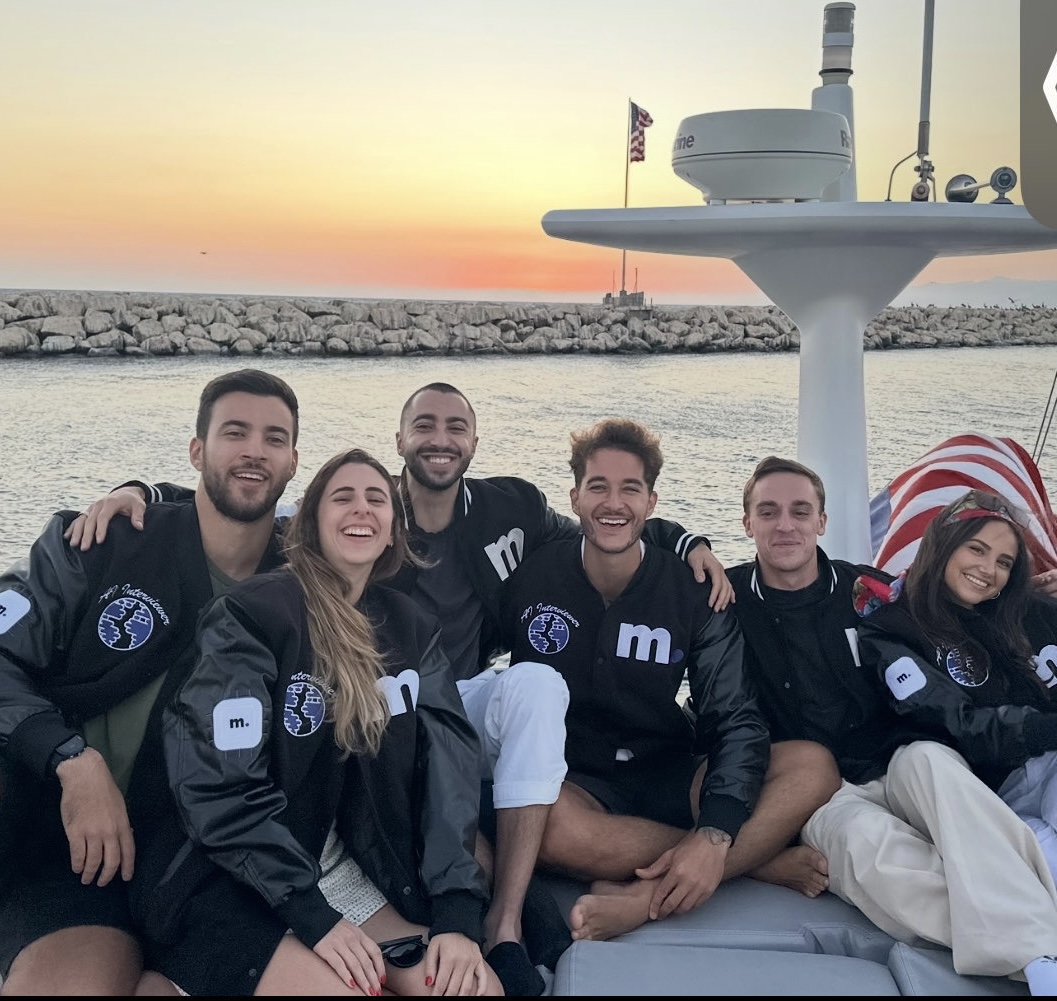
Micro1's rapid growth over the past two years has placed it among the fastest-scaling AI companies. The three-year-old startup, which helps AI labs recruit and manage human experts to train data, started the year with approximately $7 million in annual recurring revenue (ARR).
The company's ARR currently exceeds $100 million, founder and CEO Ali Ansari told TechCrunch. This number is also more than double the revenue Micro1 reported in September, when it announced a $35 million Series A at a valuation of $500 million.
Ansari, 24, said Micro1 works with major AI labs, including Microsoft, as well as Fortune 100 companies competing to improve language models at scale through post-training and reinforcement learning. Their demand for top-quality human data is fueling a rapidly expanding market that Ansari believes will grow from $10 billion to $15 billion today to nearly $100 billion within two years.
The rise of Micro1, and the rise of larger competitors such as Mercor and Surge, accelerated after it was reported that OpenAI and Google DeepMind had cut ties with Scale AI following Meta's $14 billion investment in the vendor and Scale's decision to hire its CEO.
According to the founder, Micro1's ARR is growing rapidly but is still behind its rivals. Mercor's ARR is over $450 million, and Surge's ARR is reported to be $1.2 billion in 2024, sources told TechCrunch.
Ansari attributes Micro1's growth to its ability to quickly hire and evaluate domain experts. Like Mercor, Micro1 started as an AI recruiter called Zara, matching engineering talent with software roles before pivoting to the data training market. The tool is currently interviewing and vetting applicants seeking expert roles on the platform.
In addition to providing expert-grade data to major AI labs, Ansari says two new segments that are still largely invisible today are on track to reshape the human data economy.
tech crunch event
San Francisco | October 13-15, 2026
The first is non-AI native Fortune 1000 companies that start building AI agents for internal workflows, support operations, finance, and industry-specific tasks.
The development of these agents requires systematic evaluation. That means testing the frontier model, grading its output, picking winners, fine-tuning, and continually validating its performance in production. Ansari argues that this cycle relies heavily on human experts evaluating AI behavior at scale.
The second is pre-training in robotics. This requires high-quality demonstrations of humans performing everyday physical tasks. Micro1 has already built what Ansari calls the world's largest robotics pre-training dataset, collecting demonstrations from hundreds of generalists who record their interactions with objects at home. He said robotics companies need vast amounts of data to make sure their systems work in homes and offices.
“We expect a significant portion of non-AI native companies’ product budgets to go to evaluation and human data, moving from 0% of product budgets to at least 25%,” said the CEO, who founded Micro1 while attending the University of California, Berkeley. “We are also helping robotics labs create robotics data. These two areas will represent a significant share of the $100 billion annual market.”
Despite new markets emerging, Micro1's current growth is still primarily driven by elite AI labs and AI-heavy companies. The startup is expanding its collaboration with the lab on reinforcement learning, a feedback loop for testing and improving model behavior.
In addition to expanding its specialized RL environment, Micro1 hopes its early move into robotics data and enterprise agent development will help it capture further market share as the data wars intensify.
For now, Ansari said, the company is focused on scaling responsibly, paying experts well and keeping talent at the center of an industry built around training machines.
The company currently manages thousands of professionals across hundreds of fields, from highly technical fields to surprisingly offline fields. Ansari said many earn close to $100 an hour.
“Some Harvard professors and Stanford doctoral students spend half their week training AI through Micro1,” Ansari said. “But the bigger change is in the enormity and scope of the role. It's expanding into areas that we wouldn't expect to be important in language model training, such as offline and less technical areas. We're very optimistic about where this is going.”