



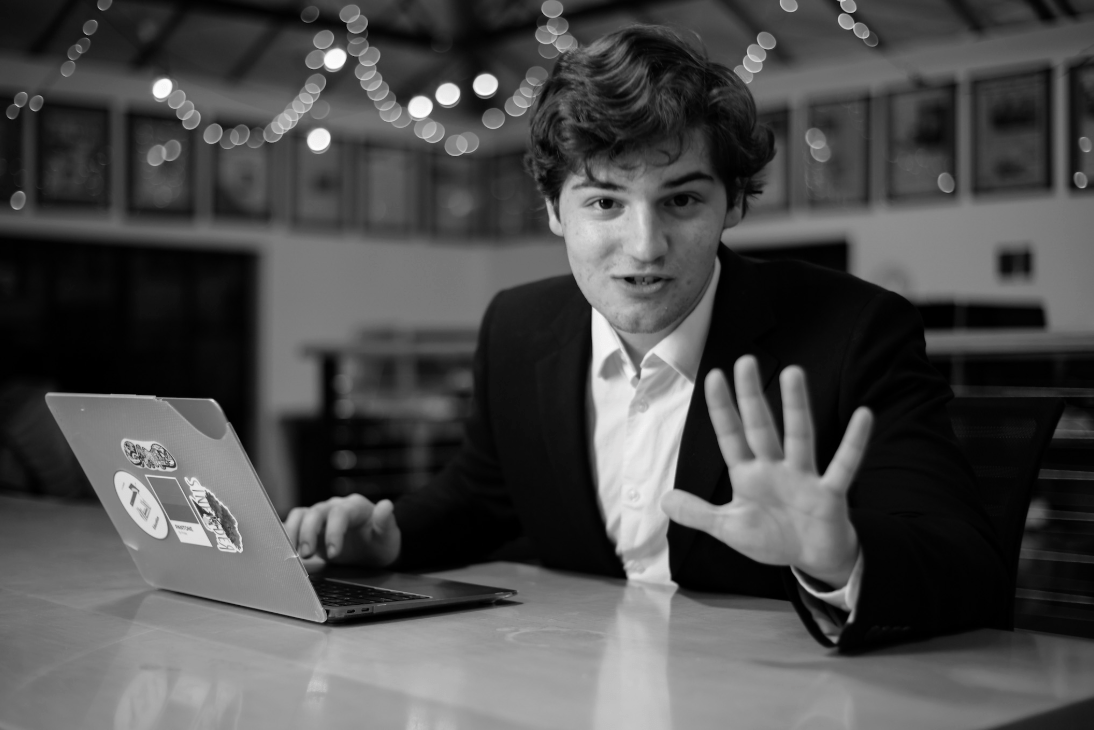
Theo Baker is truly an anomaly.
While journalism as a major has been in decline for years, with some schools even dropping it altogether, Baker, a senior at Stanford University, has focused on old-fashioned investigative reporting, and it's paying off.
Baker first gained attention as a freshman when his reporting in the Stanford Daily led to the resignation of Stanford University President Marc Tessier-Lavigne. After exposing two decades of allegations of research misconduct, Baker found himself “receiving anonymous letters, conducting stakeouts, and pursuing confidential sources” just one month into the university, according to the publisher. Meanwhile, established lawyers tried to discredit his work. By year's end, Tessier-Lavigne had resigned and Baker became the youngest recipient of the George Polk Award, one of journalism's most prestigious honors.
Shortly after, Warner Bros. and famed producer Amy Pascal won an auction for the film rights to his story.
But if the scandal makes Baker a household name, his upcoming book could cement his reputation as the rare young journalist willing to take on the Silicon Valley startup machine.
How to Rule the World, to be published on May 19, three weeks before his graduation, promises to be a sweeping expose of how venture capitalists treat Stanford students as “commodities,” luring favored undergraduates with slush funds, shell companies, yacht parties and offers of funding before acquiring business ideas in their search for the next trillion-dollar founder.
Baker, who turns 21 next month, told Axios: “I watched in real time as my peers were taught how to cut corners and spend millions of millions of dollars by people who wanted to take advantage of their talents.” The book, based on more than 250 interviews with students, CEOs, venture capitalists, Nobel laureates, and three Stanford University presidents, aims to expose what Baker describes to Axios as “a bizarre, money-filled subculture with enormous global influence.”
tech crunch event
San Francisco | October 13-15, 2026
Perhaps that's not surprising coming from someone who grew up around top journalists. His father is Peter Baker, chief White House correspondent for the New York Times, and his mother is Susan Glasser of the New Yorker. While his peers chased venture capital funding and six-figure salaries at startups, Baker spent his sophomore year reporting and taking time off his junior year to write, including two months at a Yaddo writer's retreat.
This choice becomes even more remarkable against the backdrop of journalism's current struggles. At a time when traditional journalism programs are unable to fill classes and the media industry appears to be facing relentless layoffs, Baker represents something exciting and increasingly rare: a star student who stakes his career on responsible journalism. Whether he heralds a new interest in investigative reporting remains to be seen, but one can assume that his book will capture the attention of many college students. And this book is almost certain to cause a stir in Silicon Valley during its publication.