



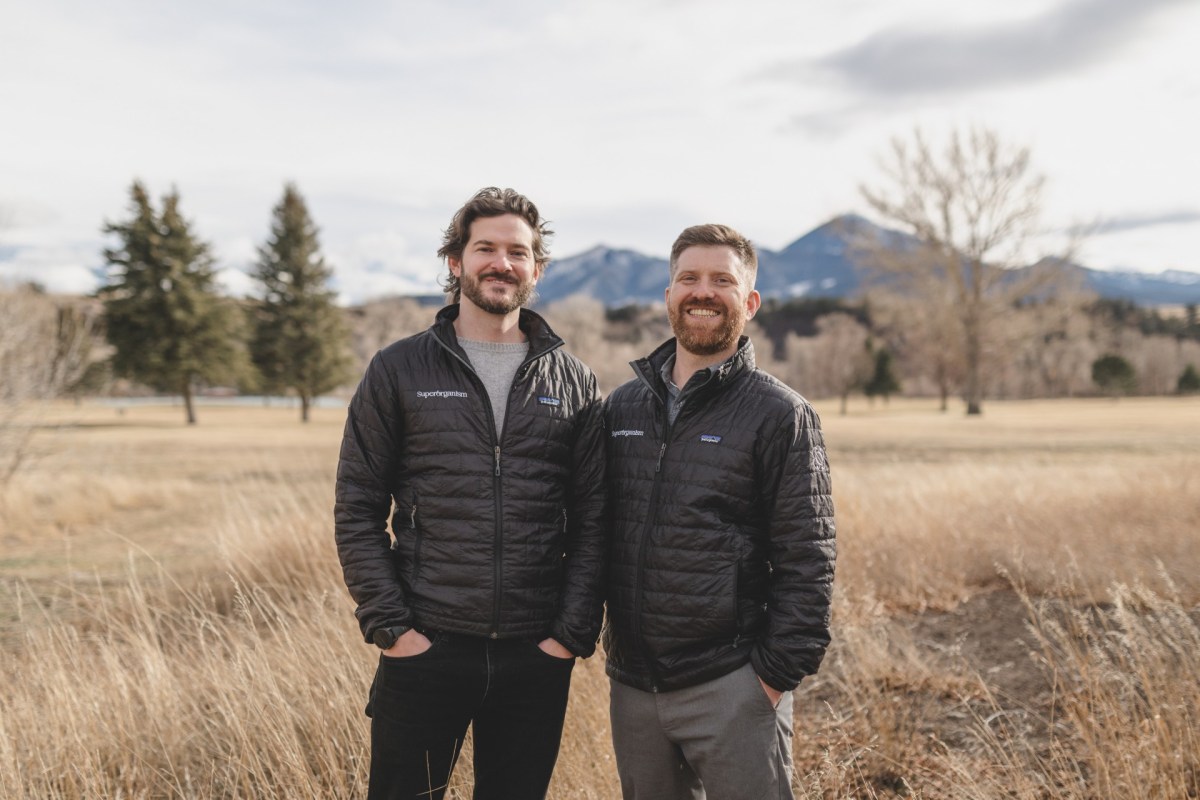
Founded in 2023 as the first venture capital firm focused on biodiversity, Superorganism aims to play the role of conservationist on the cap table for nature-friendly startups.
Now, the company has closed its first fund and secured $25.9 million in capital commitments from the Cisco Foundation, AMB Holdings, Builders Vision, among others, as well as individuals like Andreessen Horowitz partner Jeff Jordan.
Superorganism supports companies across three categories: technologies that slow or reverse extinction, startups operating at the intersection of climate and biodiversity, and tools that enable conservationists to do their jobs more effectively.
The company writes checks of $250,000 to $500,000 to pre-seed and seed-stage companies and donates 10% of profits to future conservation efforts.
“You could think of us like the Climate Technology Fund, but instead of thinking about where we can reduce carbon emissions or avoid carbon emissions in the first place, we're doing the same thing with nature loss,” Superorganism Managing Director Kevin Webb told TechCrunch.
Spoor, a Superorganism portfolio company, exemplifies the type of startups the company seeks to support. The company's software uses computer vision to track bird movement and migration patterns to minimize damage caused by wind turbines to local bird populations. This benefits both biodiversity and wind farm developers. Wind energy developers face strict regulations regarding impacts on birds. This regulation could delay construction or cancel the project.
Webb and co-founder and managing director Tom Quigley described their company's introduction to TechCrunch in 2023 as “kismet.” Webb had started making angel investments focused on biodiversity to see if it was a viable venture capital fund strategy. During this process, I contacted Mr. Quigley because I was impressed with his background. The two began talking and eventually started working for the company in 2022.
tech crunch event
San Francisco | October 13-15, 2026
The political landscape around protecting nature and the climate in general has changed significantly since they started this work several years ago, at least in the United States. But that didn't really prevent the company from hitting its $25 million goal.
Quigley said some potential LPs need guidance on understanding the difference between superorganisms and climate change funds, which he said becomes more apparent when looking at the firm's portfolio. Their portfolio companies span a variety of categories and attract different types of follow-on investors and customers.
“We intentionally build a diverse portfolio,” Quigley said. “This allows us to show what a biodiverse company looks like across all industries and all technology types. We think the fund has a portfolio that is a showcase. It's a very strong one, and one that isn't too stable.” [affected] This is due to different headwinds in different industries and different government policies of the day. ”
Many of these biodiversity issues also go beyond partisan fights over climate change, he said. Republican Florida Governor Ron DeSantis recently praised Inversa, one of SuperOrganism's portfolio companies, which processes exotic species into leather products, for helping tackle the python problem in the Everglades.
The company has invested in 20 companies so far, and the fund's portfolio size is expected to be around 35 companies.
“We recognize that we are the first, and we need to be there to bring others who may be interested in making the first bet on biodiversity and to help find and support the right people who can move the needle,” Quigley said.