



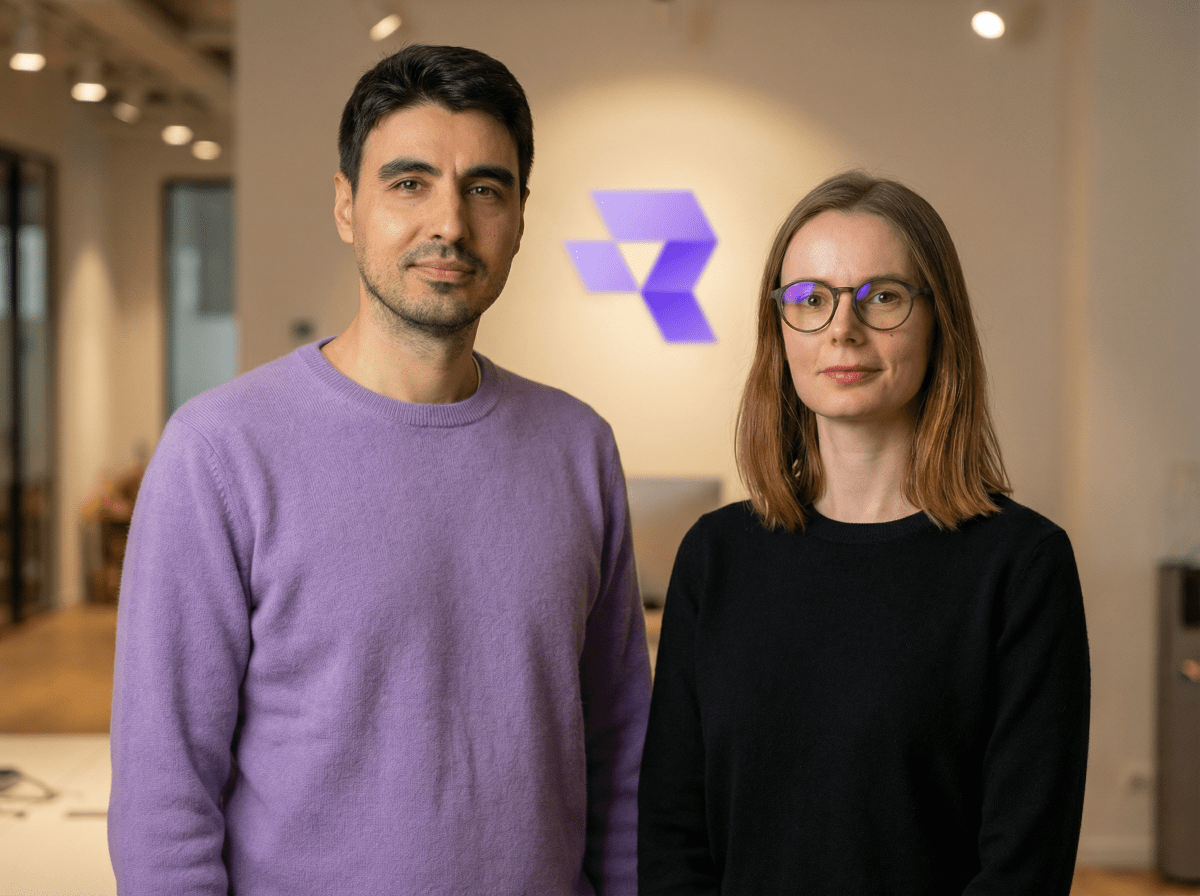
Flaviu Radulescu launched Runware in 2023. At the time, he was testing a text-to-image company and realized that while the genAI technology was powerful, it was slow at generating images. Radulescu teamed up with Ioana Hreninciuc to launch Runware, a development tools platform focused on real-time generation of images, video, and audio.
The company has experienced significant growth since its initial launch. The company told TechCrunch that over 200,000 developers have created more than 10 billion works.
This product allows developers to integrate Runware's API into their apps and generate media assets through a single interface, without having to set up new infrastructure or maintain separate integrations. It has a custom AI inference infrastructure for open-source models and offers day-zero access (meaning models can run on Runware as soon as they're released) and competitive pricing, Hreninciuc, who focuses on operations and GTM, told TechCrunch.
The company announced Thursday that it has raised $50 million in Series A funding led by Dawn Capital. Shamilah Bankiya, Partner at Dawn Capital, will join the Board of Directors. Other investors in the round include Comcast Ventures, Speedinvest, Insight Partners, and a16z Speedrun. Runware has raised $66 million in funding to date.
Freninciuk said the company remains competitive through a fully integrated API, as well as “more cost-effective” pricing. She said the company does this using the Sonic Inference Engine, which runs on custom AI hardware. We also partner with third-party AI cloud providers so we can automatically reroute your workloads when you need more memory.
“On the software side, we have significantly optimized model loading and offloading, which allows us to support over 400,000 models and infer those models in real time,” she continued.
Startups focused on image and video development tools have recently become a market of particular interest to VCs. Fal.ai, for example, just raised $140 million at a valuation of $4.5 billion, its second big raise in recent months. Fal.ai focuses on offering a wide range of models rather than customization for speed. As such, Freninciuk believes his competitors are Fal.ai and Replicate, a startup that runs open source models within apps with just a few lines of code.
tech crunch event
San Francisco | October 13-15, 2026
As Radulescu previously told TechCrunch, these companies sell based on GPU compute time. Instead, Runware leans toward the Stable Diffusion and Flux model, which has a higher cost per image produced and allows users to pay for what they need rather than buying blocks of compute time.
Hreninciuk said the new funding will be used to continue expanding the company's infrastructure, and hopes to power more than 2 million models using the Sonic inference engine. The big goal is to become the API for all AI. This allows any generative AI model to run on the platform.
“We are rapidly expanding into new avenues,” she said, adding that the company plans to expand its current team of about 25 people to make that happen.
Overall, Hreninciuk said he expects Runware to continue to “allow us to scale applications to millions of users while actually maintaining our margins,” adding that that will help make the market more affordable. It “benefits everyone,” she continued. “From app builders to end users, we are bringing powerful AI into the hands of more people around the world.”
This article has been updated to correct the spelling of Radulescu's name and update the contestant and other players who participated in the round.