


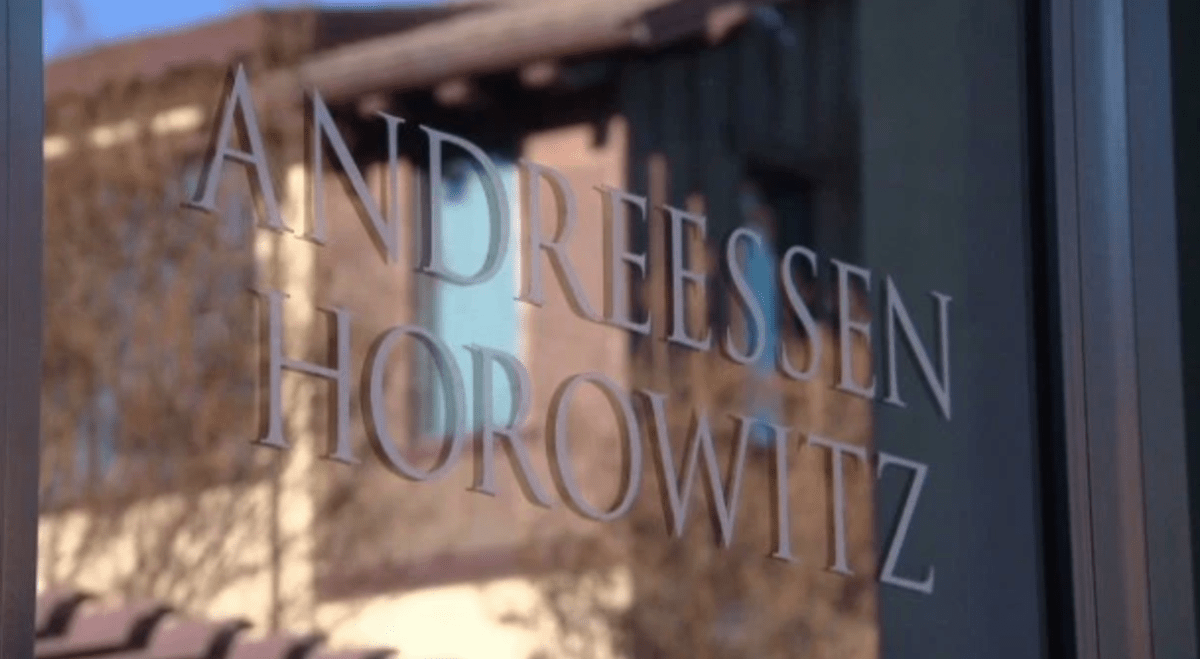
Andreessen Horowitz just announced that his company has raised just over $15 billion in new funding. The funding represents more than 18% of all venture capital allocated in the U.S. in 2025, according to company co-founder Ben Horowitz, but what's even more impressive is that the organization has more than $90 billion in assets under management, putting it on par with Sequoia Capital, one of the world's largest venture firms. This is fitting since a16z appears to be very friendly with real sovereign wealth funds, at least including Saudi Arabia's sovereign wealth fund.
The company employs approximately several hundred people in five offices, including three in California, plus New York and Washington, DC, making it a global operation with employees on six continents. In December, it opened its first office in Asia for cryptocurrency operations in Seoul.
The new capital injection is spread across five funds. $6.75 billion in growth investments, $1.7 billion each in apps and infrastructure, $1.176 billion in “American Dynamism” (more on that later), $700 million in biotech and healthcare, and another $3 billion in other venture strategies. That's the kind of money that makes you wonder where the heck it came from and, more importantly, where it all goes.
“Where did it come from?” is a question the company has historically refused to answer. When we asked a16z this week about its limited partners and its distributed-to-paid-in capital ratio, or DPI, or how much cash the company has actually returned to investors over its 16-year history, the company did not respond. What we do know is that CalPERS will invest $400 million in 2023, making it the first in A16Z's history to receive funding from a major California pension fund. This is likely because institutions with transparency requirements do not really align with the company's preference for opacity. It is also understood that Sanabil Investments, the venture arm of Saudi Arabia's Public Investment Fund, lists Andreessen Horowitz among its portfolio holdings.
The ties with Saudi Arabia are not subtle. Back in 2023, Marc Andreessen and Ben Horowitz appeared on stage with WeWork co-founder Adam Neumann to discuss his $350 million investment in his then-new residential real estate venture Flow. The conference was supported by Saudi Arabia's largest sovereign wealth fund. Horowitz praised Saudi Arabia as an “emerging nation,” adding, “Saudi Arabia has a founder. We don't call him the founder, we call him His Highness.”
But Marc Andreessen has found another royal to admire. Since President Donald Trump won the November 2024 election, Mr. Andreessen has, by his own account, spent much of his time at Mar-a-Lago, helping shape policy around technology, business and the economy. Early last year, he became an “unpaid intern” at Elon Musk's Office of Government Efficiency, vetting Trump administration candidates for tech jobs as well as Pentagon and intelligence posts. Scott Cooper, who became a16z's first employee in 2009, was named director of the U.S. Office of Human Resources Management this summer.
This is important because a16z's current strategy is focused on what it calls “American Dynamism,” which invests in defense, aerospace, public safety, housing, education, and manufacturing. This portfolio aligns well with Department of Defense priorities such as Anduril (autonomous defense systems), Shield AI (military unmanned vehicles), Saronic Technologies (autonomous naval vessels), and Castellion (hypersonic missiles). The bigger bet is that the U.S. will need to reindustrialize and relocate its key manufacturing industries, especially since, as a16z himself points out, the conflict with China over Taiwan will deplete its missile inventory “in about eight days,” and then it will take three years to rebuild.
tech crunch event
San Francisco | October 13-15, 2026
Then there's the bet on AI. This could be the company's riskiest, most rewarding play yet. A16z positions itself across all levels of the AI stack: infrastructure (Databricks), foundational models (investments in Mistral AI, OpenAI, xAI), and applications (Character.AI, many other portfolio companies).
The company has some wins to point to. A $25 million investment in Coinbase resulted in a 2021 IPO with a valuation of $86 billion. There's Airbnb (went public for over $100 billion), Slack (acquired for $27.7 billion), and GitHub ($7.5 billion to Microsoft). According to market intelligence firm Tracxn, its portfolio includes 115 unicorns, 35 IPOs and 241 acquisitions. The company also makes and loses money by acquiring cryptocurrency tokens, but the numbers are less clear.
In a blog post published Friday morning, Ben Horowitz wrote, “As the U.S. leader in venture capital, part of the fate of new technology in America rests on our shoulders.” This is the kind of statement that is sure to upset some of its rivals, which have been around for nearly 50 years compared to the much younger A16z. Horowitz describes a16z's mission as “ensuring America wins in technology for the next 100 years.”
Whether that will happen remains to be seen. What is certain is that Andreessen Horowitz has mastered the art of raising funds, this time $15 billion, to fund his vision of American technological superiority that runs through Riyadh, Mar-a-Lago, and the Pentagon. This is a pretty far-fetched suggestion, but it clearly works.